
Attic Air Sealing
Seal air leaks in your attic to work alongside moisture control for a complete home efficiency upgrade.
Learn moreMoisture rising from the soil under your home causes musty odors, soft floors, and higher heating costs. A properly installed vapor barrier stops it before it reaches your living space.
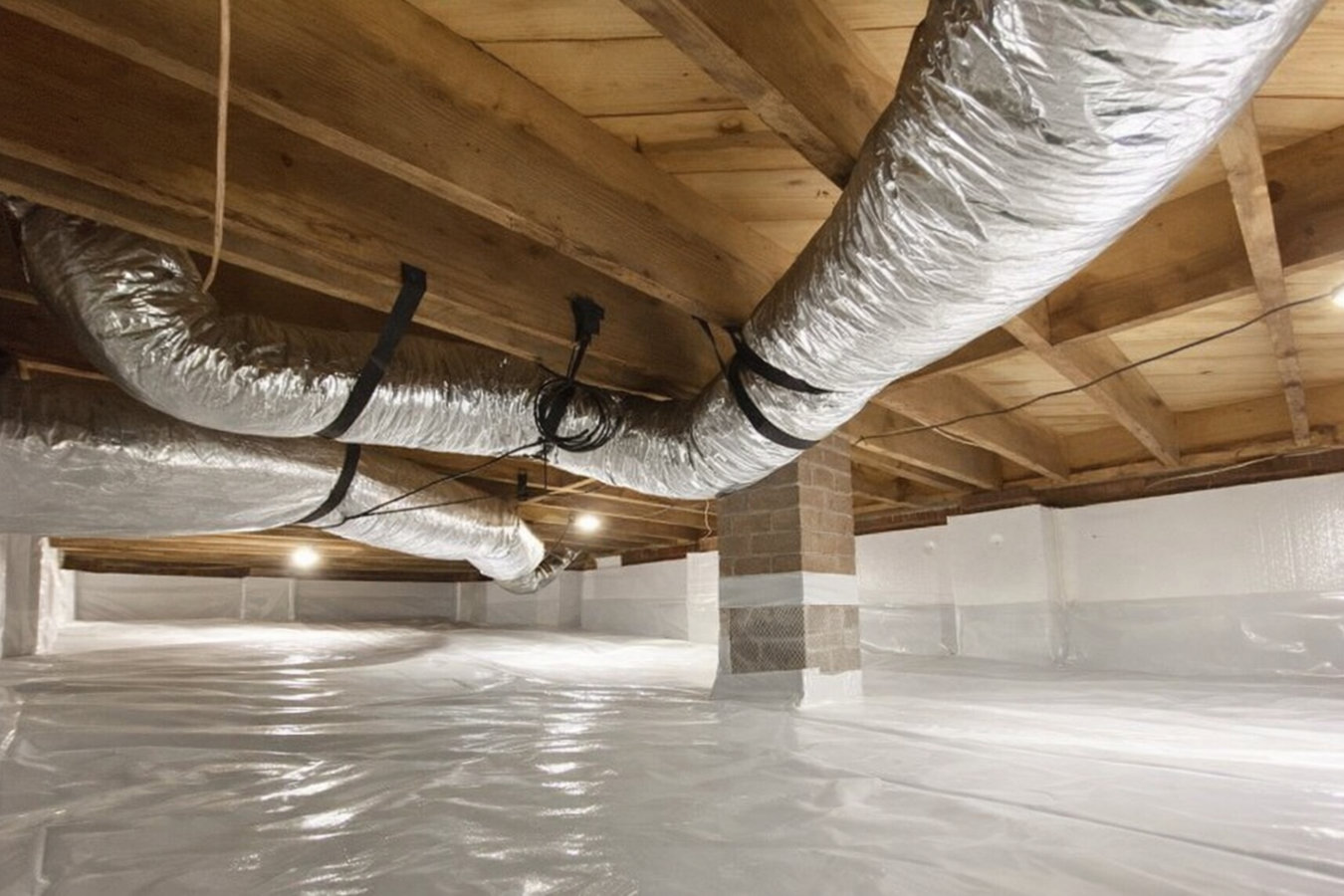
Vapor barrier installation in Grand Island covers the bare soil in your crawl space or basement floor with thick polyethylene sheeting that blocks ground moisture from seeping up into your home - most installations are completed in one day for a standard single-family home. Without it, water vapor from the soil works its way into your floors, walls, and air, causing problems you can smell and feel long before you can see them.
A significant portion of Grand Island's housing was built in the mid-20th century, when crawl space moisture protection was rarely included in construction. Many of these homes have bare dirt floors under the house with no barrier at all. If your home was built before the 1980s, there is a good chance it has never had one installed. Combining a vapor barrier with a crawl space vapor barrier system gives you complete coverage for the most vulnerable parts of your home.
These are the signals Grand Island homeowners notice most often before calling us.
If your home develops a damp, earthy odor in late winter or early spring - especially in lower rooms or near the floor - that is a strong sign moisture is moving up from your crawl space. In Grand Island, this timing follows the freeze-thaw cycles that push ground moisture upward. The smell often fades in summer but returns the following year, a little worse each time.
When moisture sits under your floors for years, it causes wood to soften, warp, or feel spongy when you walk on it. Even if the floor looks fine, a cold or slightly bouncy feel in certain spots - especially in older Grand Island homes with wood subfloors - is worth investigating. This kind of damage gets more expensive to fix the longer it goes unaddressed.
If you have ever looked into your crawl space and seen water droplets on pipes, metal ducts, or the underside of the floor, that moisture is coming from somewhere and not staying put. Condensation like this is a reliable sign that the crawl space air is too humid - exactly the problem a vapor barrier is designed to solve.
Grand Island winters are demanding, and if your heating system seems to run constantly without keeping the house warm, moisture in the crawl space may be part of the reason. Damp air under the floor pulls heat out of your home faster than dry air does. If your bills have crept up over the past few winters, crawl space moisture is worth checking.
Every installation starts with an honest on-site look at your crawl space - checking the size of the space, the condition of the soil and any existing materials, and whether there are drainage or pest issues that need to be handled first. We use plastic sheeting that is at least 6-mil thick, and typically heavier in crawl spaces where someone may occasionally need access for pipes or wiring. Seams are overlapped by at least a foot and sealed securely, and the barrier runs up the foundation walls - not just flat on the floor. If attic air sealing is on your list as well, we can assess that in the same visit and give you a combined estimate.
When the crawl space has existing moisture damage, debris, or drainage issues, we address those as part of the project before the barrier goes in - laying plastic over a wet or compromised space just traps the problem underneath. We give you a written estimate that spells out exactly what will be done and what it will cost. And we will tell you directly if your situation calls for something more than a barrier alone, like a paired crawl space vapor barrier system or additional drainage.
Suits most homes with dirt-floor crawl spaces - full floor coverage with overlapped seams and wall termination.
For crawl spaces that need prep work first - we clear out old material and address drainage before the barrier goes in.
Installed on basement floors before new flooring goes down - stops moisture from rising through concrete slabs.
Grand Island sits on the flat Platte River valley floor, where the water table is relatively close to the surface in many neighborhoods. That means moisture is not just coming from rain - it is constantly pressing up from the ground beneath your home. The freeze-thaw cycles that happen every winter in Nebraska push additional moisture upward through the soil. Homes here face more consistent moisture pressure than homes in drier or more elevated parts of the country, and that makes the quality of a vapor barrier installation - the thickness of the material, the sealing of the seams, the wall termination - more important than it would be somewhere like Colorado.
Nebraska averages around 28 inches of precipitation per year, spread across all seasons, with humid summers that push moisture into the soil and up through crawl spaces. Summer humidity levels can be high enough that even a well-drained yard still creates significant moisture pressure under the house. This means vapor barrier installation is not just a winter concern here - it is a year-round issue that affects comfort and air quality throughout the warm months too. Homeowners in York and Beatrice face the same conditions across the region, and our crew serves all of them.
A predictable process - no surprises from first call to finished job.
We ask a few quick questions - the size of your home, whether you have a crawl space or basement, and what specific problems you have noticed. Most contractors in Grand Island offer free estimates, so there is no cost to getting started. We reply within 1 business day.
We visit your home and look at the crawl space in person - checking size, soil condition, existing materials, and any drainage or pest issues. This takes 30 to 60 minutes, and we walk you through exactly what we found and what the job will involve.
The crew arrives, sets up at the access point, and works entirely under the house. They lay the sheeting, overlap and seal the seams, and run the barrier up the walls. On a standard home, this takes most of a single workday. You can go about your normal routine.
When the work is done, we walk you through what was installed and invite you to look for yourself if you are comfortable doing so. You get written documentation of what was installed - useful if you ever sell the home or need warranty service.
Free estimate. Written scope. No pressure. We reply within 1 business day.
(308) 403-0467Every vapor barrier job ends with a written record of the material we installed and a walkthrough of the finished crawl space. That documentation gives you a clear reference point if you ever sell the home or need to revisit the work - and shows exactly what went in and where.
We use polyethylene sheeting rated for long-term crawl space use - typically 10-mil or heavier, depending on your space. Thinner material tears, degrades through freeze-thaw cycles, and lets moisture through within a few years. The material we install is built to last 20 years or more in Nebraska's climate, not just until the next winter.
We never quote a vapor barrier job from a phone call alone. Every estimate starts with an in-person crawl space inspection. You will know exactly what we found, what we recommend, and why - and you will never be sold work your home does not actually need. The EPA notes that moisture and humidity control is one of the most important factors in indoor air quality.
We serve homeowners across Grand Island and 11 surrounding communities, from Kearney and Hastings to Columbus and Norfolk. Our crew works across this part of Nebraska every week, which means we know the soil conditions, housing stock, and seasonal moisture patterns specific to this region.
Every vapor barrier installation we complete is documented in writing and walked through with the homeowner when we finish. You know exactly what went in under your house and you have a record to prove it.
Seal air leaks in your attic to work alongside moisture control for a complete home efficiency upgrade.
Learn morePurpose-built crawl space vapor barrier installation with full floor coverage and foundation wall termination.
Learn moreSpring thaw season is the busiest time of year for crawl space work - reach out now so we can get your installation on the calendar before the wet season arrives.