Home insulation
A whole-home insulation review covers attic, walls, and crawl spaces together so no area of heat loss goes unaddressed.
Learn more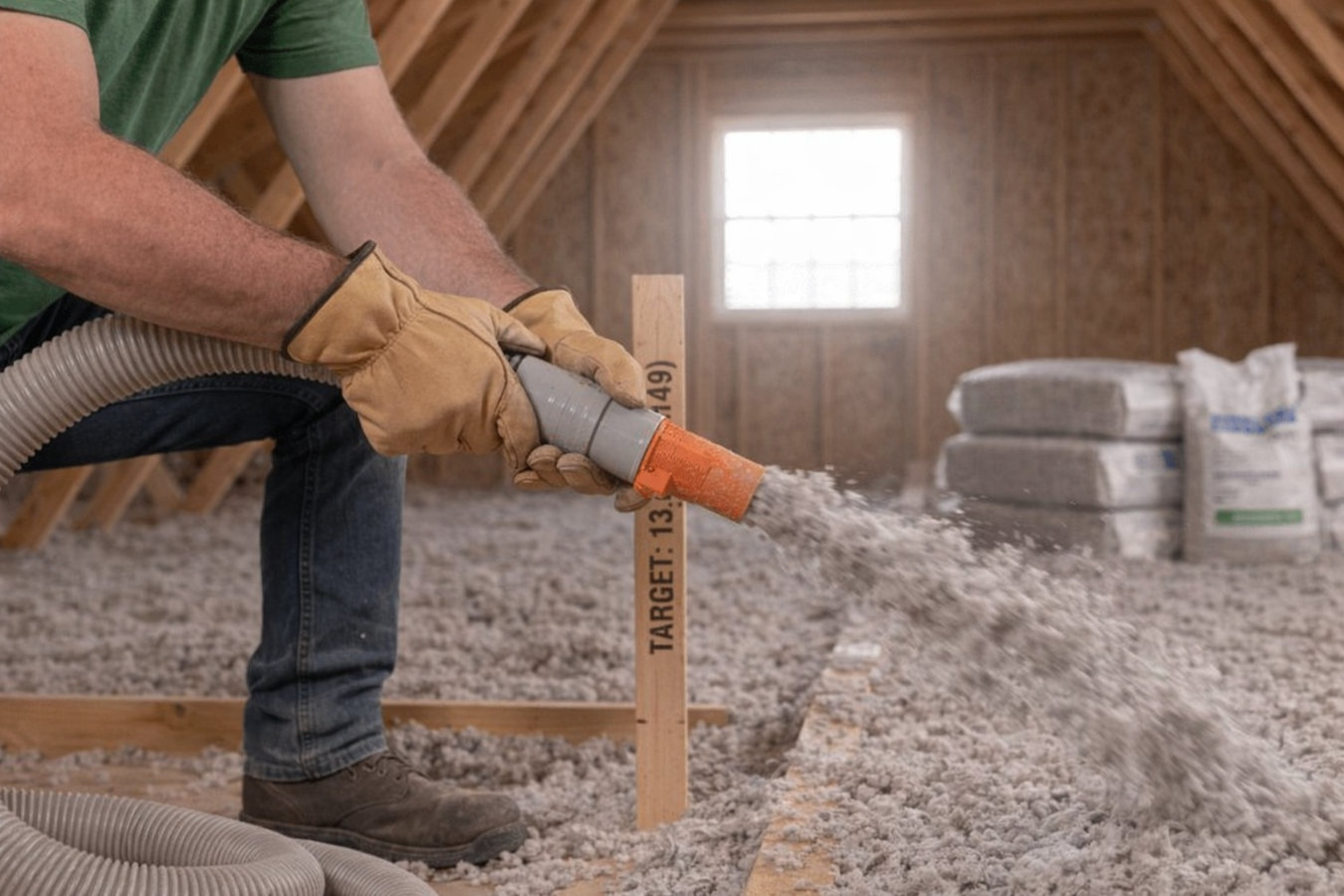
Loose-fill insulation fills every corner batt rolls miss - giving your Grand Island home the consistent coverage it needs to stay comfortable all year.
Blown-in insulation in Grand Island means loose fiberglass or cellulose material blown into your attic through a hose - most jobs are finished in a few hours and create a uniform layer that covers every corner. It is the most practical choice for attics with irregular framing, existing insulation that needs topping up, or spaces where batts simply cannot lay flat.
If your Grand Island home was built before 1990, there is a good chance the attic insulation is well below the depth recommended for Nebraska winters. Thin, settled insulation means your furnace works harder every month. Pairing new blown-in material with proper air sealing is the combination that actually moves the needle on comfort and energy bills. If your attic already has some insulation but it looks flat or patchy, attic insulation service can help you decide whether a top-up or a full replacement makes more sense.
If your heating or cooling costs have crept up over recent seasons without a change in habits, thin attic insulation is one of the first things to check. In Grand Island, where furnaces run hard from November through March, under-insulated attics quietly drain money all winter long. Addressing this before the next cold snap is almost always worth it.
Peek into your attic. If you can see the wooden framing members through the insulation layer, the coverage is too thin. A properly insulated attic in Nebraska should have a thick, fluffy layer that completely buries those joists. Flat, compressed, or patchy material is not delivering its rated performance.
Uneven temperatures between floors or rooms is a classic sign that heat is escaping through the ceiling. Many older Grand Island homes were built with minimal attic coverage, and the result is a top floor that chills out fast in winter. Blown-in insulation creates a consistent layer that helps even out those differences.
When a strong northwest wind hits in January, a well-insulated home should feel solid inside. Cold drafts near ceiling fixtures or along upper walls during windy weather suggest air is pushing through gaps - gaps that proper insulation and air sealing would close. Nebraska winds make this symptom more noticeable than in calmer climates.
Grand Island Insulation offers blown-in attic insulation for existing homes across central Nebraska. We use fiberglass or cellulose material depending on your attic conditions, existing coverage, and budget. Before any material goes in, we seal gaps around light fixtures, pipes, and framing openings - because air sealing and insulation work together. Skipping that step is one of the most common reasons homeowners do not see the savings they expected.
If your home needs more than an attic top-up, we also offer whole-home insulation service that covers walls, crawl spaces, and other areas where heat loss is happening. Each project starts with a free on-site assessment so you know exactly what is needed before any work begins.
Best for homes with existing thin coverage or irregular framing that batt rolls cannot cover evenly.
Ideal for finished walls where drilling small access holes allows material to be blown into closed cavities.
Recommended for any home where gaps around fixtures and framing are letting conditioned air escape before the insulation can stop it.
For homes with some existing insulation that has settled or thinned over time and needs to reach current recommended depth.
Grand Island sits in a climate zone where winters regularly drop below 10 degrees and summers push past 95. That range means your insulation is working hard in both directions all year. A large share of the city was built in the 1950s through 1970s - decades when insulation standards were far less demanding than they are today. If your home is in one of those established neighborhoods and has never had insulation work done, the attic coverage is likely well below what Nebraska winters demand. The region also sees persistent northwest winds in winter that push cold air through gaps more aggressively than in calmer parts of the country.
Grand Island also sits near the Platte River valley, where summer humidity is higher than in drier parts of the state. That moisture can cause blown-in insulation to clump and lose effectiveness if a moisture or ventilation issue is not addressed before installation. We check for both before any material goes in. We regularly serve homeowners in Kearney and Hastings as well, where similar housing ages and climate conditions make blown-in insulation one of the most practical upgrades available.
We respond within 1 business day to set up a free in-home estimate. We never quote a firm price without seeing the attic first - conditions vary too much to be accurate otherwise.
We go into your attic, measure existing depth, check for moisture or ventilation issues, and identify air gaps to seal. You receive a written estimate before any commitment is made.
The crew arrives with a blowing machine, seals air gaps first, then blows material evenly across the attic floor from the far corners back to the hatch. You can stay home.
Before leaving, we attach the required label on your attic hatch showing how many bags were installed and the coverage achieved. We walk you through what was done.
We respond within 1 business day. There is no obligation to proceed after your estimate. Once you submit, someone from our office will call to schedule a free on-site assessment at a time that works for you.
(308) 403-0467We schedule an in-home visit before quoting any price. Attic conditions vary too much for a phone number to be reliable. You get a written estimate based on what we actually find.
We seal gaps around fixtures and framing before blowing in any material. Skipping this step is why many insulation jobs fail to deliver the expected savings. We do not skip it.
A large share of Grand Island homes were built in an era of minimal insulation standards. We work in these homes regularly and understand what they need. We have assessed homes throughout Hall County.
Federal rules require a label showing bag count and coverage level. We leave it on your hatch every time. It is your record that the job was done right - useful for tax credits and future home sales. Learn more from the FTC R-Value Rule.
Blown-in insulation is a straightforward upgrade that delivers real results when it is done thoroughly. We have worked in homes across Grand Island and the surrounding area, and every job gets the same attention - air sealing first, consistent coverage, and documented completion.
A whole-home insulation review covers attic, walls, and crawl spaces together so no area of heat loss goes unaddressed.
Learn moreFocused attic insulation service for homes where the ceiling is the primary source of heat loss in winter.
Learn moreCall Grand Island Insulation today for a free on-site estimate - the sooner you add coverage, the less you pay to heat your home this winter.