
Open-Cell Foam Insulation
A softer, more flexible spray foam option well-suited for interior walls and attic spaces where budget and sound control matter.
Learn more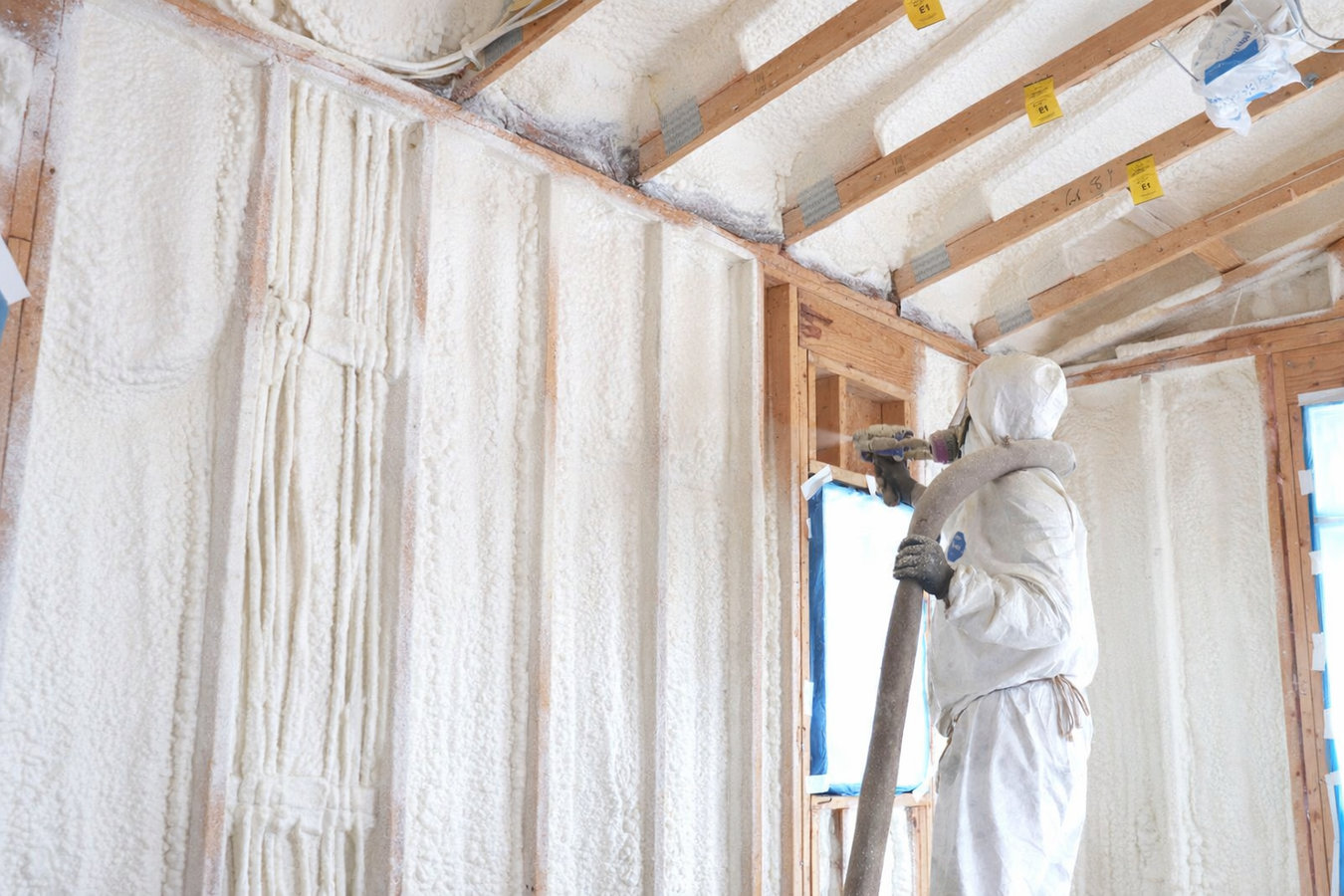
Grand Island winters demand the highest-performing insulation available. Closed-cell foam seals air, blocks moisture, and delivers more R-value per inch than any other option.
Closed-cell foam insulation in Grand Island is a high-density spray foam that hardens into a firm, rigid layer - sealing air leaks and acting as a moisture barrier at the same time - and most residential jobs covering a crawl space, rim joist, or attic section are completed in a single day.
Unlike batts or blown-in material, closed-cell foam expands to fill irregular gaps and bonds directly to old wood framing - which makes it particularly well-suited for Grand Island homes built in the 1950s through 1970s, where gaps and cracks in the building envelope are common. It provides the highest R-value per inch of any material available to homeowners, which matters when you are working in tight spaces like rim joists and crawl space walls.
Many homeowners who call us about closed-cell foam also ask about open-cell foam insulation and want to understand the trade-offs. If you are looking at a full spray foam insulation project and are not sure which type fits your home, we walk you through both options during the estimate visit at no cost.
Grand Island winters are genuinely cold, and if your furnace seems to run constantly without keeping the house comfortable, heat is escaping somewhere. If your bills have crept up year over year without a change in habits, poor insulation or unsealed air leaks are often the cause. This is one of the most common complaints from homeowners in older Grand Island neighborhoods.
When the wind picks up on the Nebraska plains, you should not feel it inside your home. If you notice cold air near baseboards, electrical outlets on exterior walls, or along the floor in rooms above a crawl space, air is getting in through gaps that insulation alone has not sealed. Closed-cell foam is specifically designed to stop this kind of infiltration.
Grand Island's proximity to the Platte River valley means crawl spaces here are prone to dampness. If you notice a musty smell from floor vents, see wet soil under the house, or find soft spots in flooring, your crawl space likely needs both moisture control and better insulation. Closed-cell foam addresses both in one application.
If one part of your home is noticeably colder in winter or hotter in summer than the rest, that area is likely poorly insulated from an unconditioned space below. Crawl spaces are a common culprit. Closed-cell foam applied to crawl space walls and rim joists often solves this quickly and permanently.
We apply closed-cell foam in the areas of a home where air sealing and moisture resistance matter most. Crawl space walls and rim joists are the most common application in Grand Island - both areas are exposed to ground cold and the moisture that comes with being near the Platte River valley. Attic rafters and the underside of roof decks are another high-value location, particularly for homes with HVAC equipment in the attic where a conditioned space makes more sense than a vented one. We also install open-cell foam insulation where sound control and budget are the primary drivers.
For homes that need a broader approach, closed-cell foam pairs well with our full spray foam insulation service - which covers open-cell applications in attic floors and interior walls alongside closed-cell work in moisture-sensitive areas. We recommend the right combination for your home after the on-site assessment, not before.
Best for homes near the Platte River valley or with any history of moisture under the floor.
Converts a vented attic to a conditioned space - good for homes with HVAC equipment in the attic.
One of the highest-ROI applications in older Grand Island homes with cold floors and drafty basements.
Used during renovations when wall cavities are opened - adds thermal performance and air sealing to older framing.
Grand Island sits in a climate zone where winters push well below zero and summers push well past 90 degrees - a swing of more than 100 degrees that puts constant stress on any home that is not properly sealed. Nebraska is also one of the windiest states in the country, and Grand Island's open Great Plains location means persistent winds that drive cold air through even small gaps in a home's exterior. Closed-cell foam is one of the few materials that addresses both problems at once: it insulates to a high R-value and seals air infiltration in a single pass, with no separate air barrier needed.
The moisture factor is equally important in this area. Grand Island sits near the Platte River, and crawl spaces across the city - particularly in lower-lying neighborhoods and older homes near downtown - can experience elevated ground moisture in spring and after heavy rain. We work across the region, including Columbus and York, where similar climate and housing conditions apply. For any home in this region where moisture and extreme cold are both in play, closed-cell foam is the most complete single solution available.
We ask a few basic questions about what area of the home you are concerned about and roughly how old your home is. We respond within 1 business day and schedule an in-home visit from there.
We walk through the attic, crawl space, walls, or other areas - taking measurements and checking for existing insulation and moisture issues. You receive a written estimate specifying area, thickness, and total cost before committing to anything.
Clear the work area and plan to stay out of the treated space for at least two to four hours after spraying. Your contractor will give you a specific prep list and re-entry time before the crew arrives.
The crew masks surfaces, sprays the foam in controlled passes to build the right thickness, and cleans up before leaving. Most crawl space or attic jobs wrap up in a few hours. We walk you through the finished work before the crew leaves.
Free on-site estimate. We respond within 1 business day - no sales pitch, just straight answers.
(308) 403-0467We are based in Grand Island, not a franchise crew from out of town. We know the 1950s through 1970s ranch homes that dominate the city, the Platte River valley moisture patterns, and which areas of a home matter most in Nebraska winters.
Foam applied at the wrong thickness can shrink, crack, or underperform - and you will not always see it right away. We measure as we go and do not rush. If the foam is not meeting the spec we quoted you, we do not sign off on the job.
Every estimate we provide is based on an in-home visit where we measure the actual area and assess the conditions. A phone quote without a site visit is not something we do - too many variables affect the final number.
You get a written record of what was installed and a walkthrough when we finish. Homeowners deserve a contractor who puts the details on paper - not just tells you verbally what was done.
The Spray Polyurethane Foam Alliance sets the training and safety standards for professional spray foam installation - contractors familiar with those standards are doing the job the way it is meant to be done, not cutting corners on mixing ratios or application thickness. That is the standard we hold our crew to on every job in Grand Island.
The U.S. Department of Energy and the U.S. Environmental Protection Agency both publish guidance on spray foam insulation - covering material types, re-entry safety, and what homeowners should expect from a properly installed job.
A softer, more flexible spray foam option well-suited for interior walls and attic spaces where budget and sound control matter.
Learn moreLearn more about spray foam in general - how it works, where it is applied, and how it compares to other insulation options.
Learn moreSpray foam work is best scheduled before the cold sets in - reach out today and we will get you on the calendar.