
Closed-Cell Foam Insulation
High-density closed-cell foam for areas where moisture resistance and maximum R-value per inch are the priority.
Learn more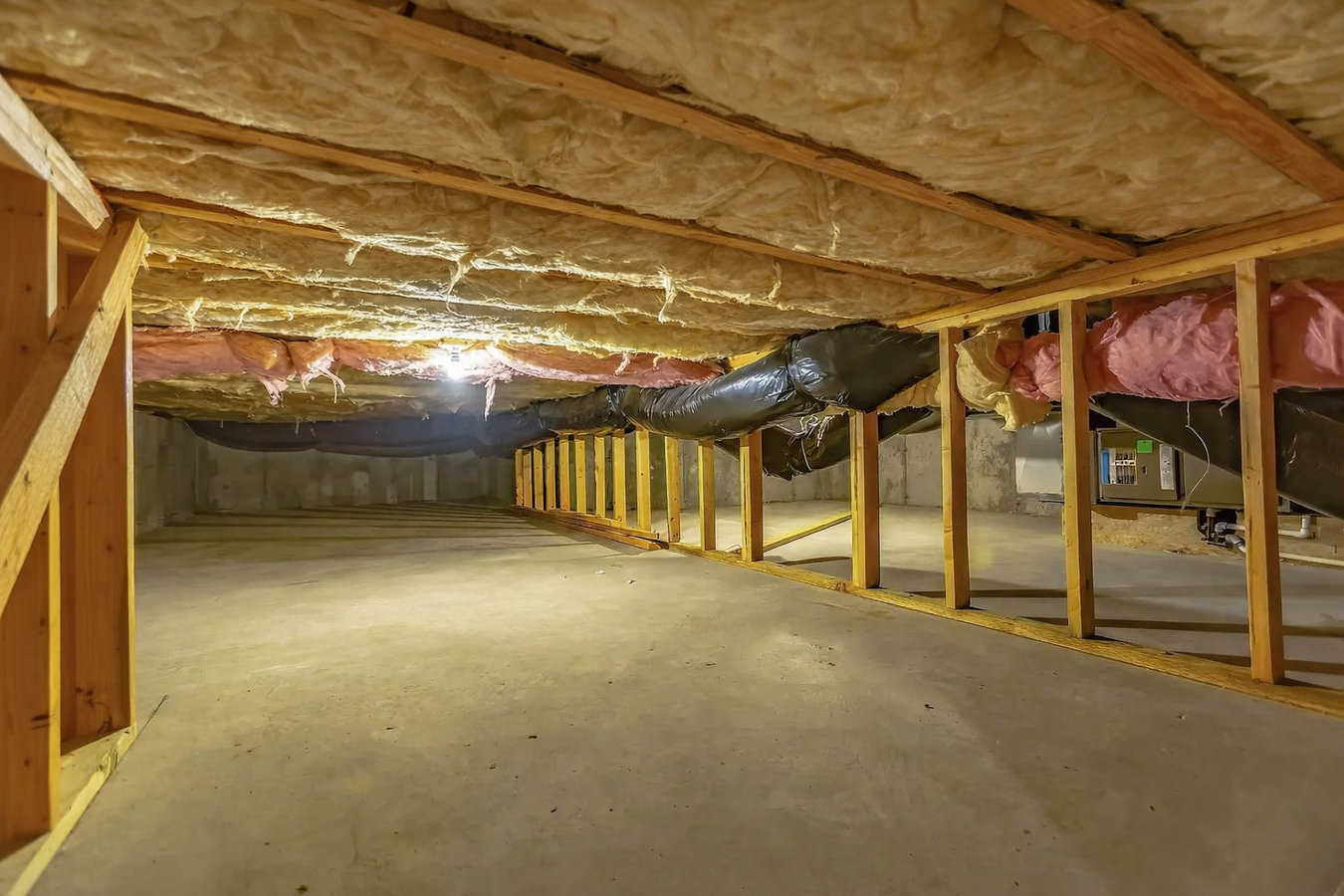
Cold floors and January heating spikes in Grand Island usually trace back to an uninsulated basement. We seal the rim joists and walls so your furnace works less and your home stays comfortable.
Basement insulation in Grand Island creates a barrier between the cold ground and your living space, keeping heat from escaping through your foundation walls and rim joists - most jobs covering an average unfinished basement are completed in one to two days.
Grand Island has a large share of homes built in the 1950s through 1970s, a period when basement insulation simply was not standard practice. If your home falls in that range, there is a good chance your rim joists and foundation walls have never been addressed - which is one of the main reasons your floors feel cold in January and your gas bill climbs. Basement insulation in Grand Island is often the single most direct fix for both problems.
Homeowners who call us about basement insulation often ask about closed-cell foam insulation at the same time - it is a natural pairing because closed-cell foam seals air and resists moisture in one step, which matters in a basement environment. If your home also has a crawl space, we can address both areas together.
Walking across your first floor in socks during a Grand Island winter and feeling cold underfoot means heat is escaping through your basement. This is especially common in older homes where the rim joist area has never been insulated or sealed. Cold floors signal your furnace is running longer and costing you more.
Grand Island's coldest months put real pressure on home heating systems. If your gas bills jump sharply in January and February without any change in your thermostat settings, your basement is likely one of the main places heat is escaping. An uninsulated or under-insulated basement can account for a large share of that loss.
Stand near the bottom of your basement ceiling on a cold, windy day and hold your hand close to where the wall framing sits above the foundation. If you feel a draft or noticeably cooler air, the rim joist area is not sealed. In Grand Island, where wind-driven cold air is a real factor, this is one of the most common and fixable sources of heat loss.
When warm, humid summer air meets a cool, uninsulated concrete wall, moisture condenses on the surface. If you see damp patches, water stains, or notice a musty smell in your basement during summer months, your walls may lack insulation and are creating a condensation problem worth addressing before it leads to mold.
We install three main materials depending on your basement, your budget, and whether moisture is a factor. Spray foam - both open-cell and closed-cell foam insulation - expands to fill gaps and seals air leaks at the same time, making it the strongest performer in older homes with drafty rim joists. Rigid foam boards are cut and fitted against foundation walls for a cost-effective option that still handles moisture well. Fiberglass batts are the most affordable choice for unfinished basement walls when moisture is not a concern.
The rim joist is almost always our first recommendation in older Grand Island homes - it is a narrow band of framing at the top of your foundation that is responsible for a disproportionate amount of heat loss. After the rim joist, we assess the foundation walls and recommend the right material for your specific basement. We also pair basement work with our crawl space insulation service for homes that have both spaces needing attention.
Best for older homes where the top of the foundation wall is the primary source of cold air and heat loss.
Best for foundation walls in basements where moisture intrusion is a concern alongside heat loss.
Good option for dry basements where budget matters and the primary goal is adding R-value to foundation walls.
Cost-effective for unfinished basements with dry foundation walls and no air sealing requirements.
Grand Island sits in the Great Plains where winter temperatures regularly drop below zero and the ground freezes deep each year. That frost depth puts real thermal stress on foundation walls, and Nebraska's persistent winds push cold air through even small gaps around rim joists and along the foundation perimeter. The city also has clay-heavy soils that expand when wet - which can create small cracks in foundation walls over time, letting in both cold air and moisture. For homes near the Platte River valley and in the older neighborhoods downtown, these are year-round factors that make basement insulation more than just a comfort upgrade.
The vast majority of Grand Island homes run on natural gas, and heating bills in this climate are among the most significant utility costs a homeowner faces. We work across the region, including homes in Hastings and Kearney, where the same climate conditions apply. If you are in one of Grand Island's established neighborhoods - homes near Fonner Park, along the older sections near downtown, or in the ranch-home neighborhoods that define much of the city - basement insulation work is often the best return on investment you can make before the next heating season.
When you reach out, we ask a few basic questions about your basement size, whether it is finished or unfinished, and any moisture issues you have noticed. We respond within 1 business day and schedule the on-site visit from there.
We walk your basement, check the foundation walls, rim joist area, and any existing insulation, and look for signs of moisture. You receive a written estimate that spells out what will be done and which materials will be used - not just a single number.
Move items away from the walls - typically two to three feet of clearance. If spray foam is being used, plan to stay out of the basement for a few hours after application while the material cures. Your contractor will give you a specific prep list.
Most basement insulation jobs are completed in a single day. The crew cleans up after the work and walks you through the finished job before leaving. Point out anything that looks incomplete and ask them to address it on the spot.
Free estimate, no obligation. We respond within 1 business day.
(308) 403-0467We are a locally based contractor who knows Grand Island's housing stock - particularly the 1950s through 1970s ranch homes that make up a large share of the city. We know where the problems usually are before we even walk in.
Grand Island's clay soils and freeze-thaw cycles can push water against foundation walls. We check for moisture intrusion before recommending a material - if we find a problem, we tell you and address it first rather than insulating over it.
You receive a written quote that specifies the areas being insulated, the material being used, and the total cost before any work begins. No surprises when the job is done.
Our crews know how central Nebraska homes are built and coordinate any permits your project requires. You get people who understand local conditions and do the work to code.
Contractors registered with the Nebraska Department of Labor have met the state requirements to work legally in your home - and that is the baseline we hold ourselves to on every job, whether it is a single rim joist or a full basement project. Every estimate we give you is free, written, and yours to compare against any other quote you receive.
The U.S. Department of Energy and the ENERGY STAR program both publish guidance on basement insulation best practices - including rim joist sealing, material selection, and what proper finished work should look like.
High-density closed-cell foam for areas where moisture resistance and maximum R-value per inch are the priority.
Learn moreProtect the underside of your home from ground cold and moisture with proper crawl space insulation.
Learn moreFall slots book quickly - reach out now to lock in your estimate and get the work scheduled before the cold arrives.