
Wall insulation
Pair crawl space work with wall insulation to address heat loss from multiple directions at once - a common upgrade for older Grand Island homes.
Learn moreCold floors and climbing gas bills in winter often trace back to one place - an unprotected crawl space. We fix that with insulation built for Nebraska's climate.
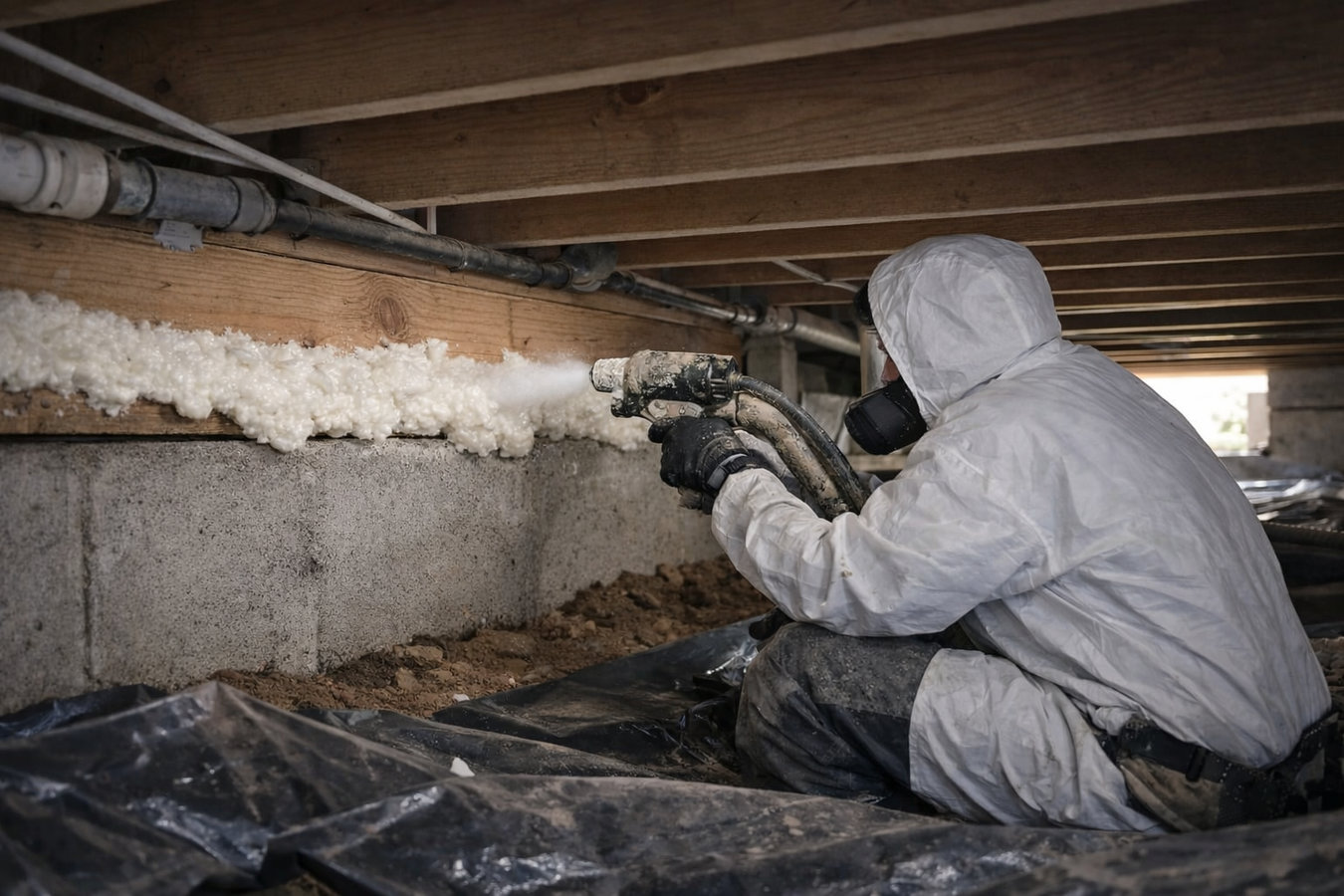
Crawl space insulation in Grand Island acts as a thermal barrier between the cold ground and your living areas, slowing heat loss through your floors in winter and keeping cool air in during summer - most installations are completed in one day for a standard single-family home. Without it, your furnace runs longer, your floors stay cold, and your pipes are exposed to below-zero temperatures every January.
Many Grand Island homeowners do not think about their crawl space until they are already paying the price in higher utility bills or a burst pipe. The good news is that fixing it is straightforward. If the space also has moisture issues or old material that needs to come out first, we handle that as part of the same project - just as we do with wall insulation upgrades across the home.
These are the signs Grand Island homeowners notice most often before calling us.
If you walk across your kitchen or living room on a January morning and it feels like stepping onto a cold slab, your crawl space insulation is likely failing or missing. This is especially common in older Grand Island homes where original insulation has sagged, gotten wet, or worn out over decades of harsh winters.
If your gas bill has climbed over recent winters without a clear reason, your crawl space could be the culprit. Heat loss through an uninsulated crawl space is invisible but shows up clearly on your utility statement. Grand Island's long heating season means even a modest improvement in crawl space insulation produces a noticeable drop in monthly costs.
A damp, musty odor near floor level or in rooms above the crawl space often signals moisture that has gotten into the space below. In Grand Island, spring rains and soil moisture can work into unprotected crawl spaces, and wet insulation quickly becomes a breeding ground for mold. If you are smelling something new, it is worth having someone take a look.
If you have had a pipe freeze or burst during a cold snap, your crawl space almost certainly lacks adequate insulation and air sealing. Grand Island regularly sees temperatures well below zero in January and February, and pipes running through an unprotected crawl space are vulnerable every single winter.
Every job starts with an honest assessment of your crawl space - checking for moisture, mold, pest activity, and whether the space is vented or sealed. That assessment shapes what we recommend. For vented crawl spaces, which are most common in older Grand Island homes, we install insulation between the floor joists overhead. For sealed crawl spaces, insulation goes on the walls and sometimes the ground itself. We also include air sealing around pipes, wires, and gaps before any material goes in - a step that determines how well the insulation actually performs.
When old material needs to come out before we install new, we handle the removal as part of the same project. If the crawl space also needs a crawl space vapor barrier to address moisture, we can combine both in one visit. That means less disruption for you and better protection overall, since both systems work together.
Standard approach for vented crawl spaces in older Grand Island homes - installs between the joists above.
Used in sealed crawl spaces - insulates the perimeter walls and sometimes the ground for full encapsulation.
Best when old material has deteriorated or become contaminated - full removal and fresh installation in one project.
Grand Island sits in Nebraska's continental climate zone, where winter temperatures regularly drop below zero and summer heat pushes past 100 degrees. Your crawl space insulation has to work in both directions - keeping heat in during brutal winters and keeping it out during scorching summers. A significant share of Grand Island's housing was built before modern energy codes required adequate crawl space insulation, meaning many homes have either no insulation, deteriorated original material, or insulation installed incorrectly decades ago. If your home was built before the 1980s, there is a good chance your crawl space is one of the biggest sources of heat loss in the house.
Grand Island also receives meaningful spring rainfall, and the area's soil moisture fluctuates significantly through the year. That moisture can migrate upward into an unprotected crawl space, leading to condensation, mold, and insulation that gets wet and loses its effectiveness. Homeowners in York and Columbus face the same Nebraska climate conditions, and our team serves the full region.
A straightforward process - from your first call to a warmer home.
We ask a few basic questions - the age of your home, whether you have noticed cold floors or high bills, and whether you know if the crawl space has ever been insulated. We schedule an in-person visit. We reply within 1 business day.
We inspect the crawl space directly - checking its size, the condition of any existing insulation, and signs of moisture, mold, or pest activity. You get a written estimate that explains what we found and why we are recommending what we are.
The crew removes old material if needed, addresses air sealing gaps, and installs new insulation. You do not need to leave. Most standard jobs in Grand Island are completed in one day, with cleanup before we go.
Before we leave, we show you what was installed and point out anything that should be monitored going forward. You should start noticing warmer floors and more consistent temperatures within your first heating season.
Free estimates, no obligation. We assess your crawl space in person and give you a written quote you can actually compare. Reply within 1 business day.
(308) 403-0467Installing insulation over a wet crawl space is one of the most common contractor mistakes. We check for standing water, condensation, and mold before anything goes in. Skipping this step leads to rot, mold, and insulation that fails within a few years of installation.
Sealing gaps around pipes, wires, and fixtures before insulation goes in determines how well the whole system performs. Contractors who skip this step leave your crawl space performing well below its rated R-value. We include it as part of a complete installation.
We work across Hall County and central Nebraska year-round and understand what Grand Island's continental climate actually requires - not just code minimums, but insulation systems that hold up through repeated freeze-thaw cycles and spring moisture seasons. The U.S. Department of Energy recommends R-25 to R-30 for crawl space floors in Nebraska's climate zone.
A properly insulated and sealed crawl space protects pipes from freezing when temperatures drop below zero - which happens multiple times every Grand Island winter. Homeowners who have had a pipe burst know exactly how expensive that is. This is the fix that prevents it from happening again.
Every crawl space job ends with written documentation of what was installed and a walkthrough of the space. That paper trail matters when you are selling the home or checking in with your insurer.
Pair crawl space work with wall insulation to address heat loss from multiple directions at once - a common upgrade for older Grand Island homes.
Learn moreA vapor barrier works alongside crawl space insulation to block moisture from rising up from the ground - especially important in Nebraska's wet spring seasons.
Learn moreCold floors and high heating bills are not normal - they are fixable. Contact us today for a free estimate and protect your home through every season.